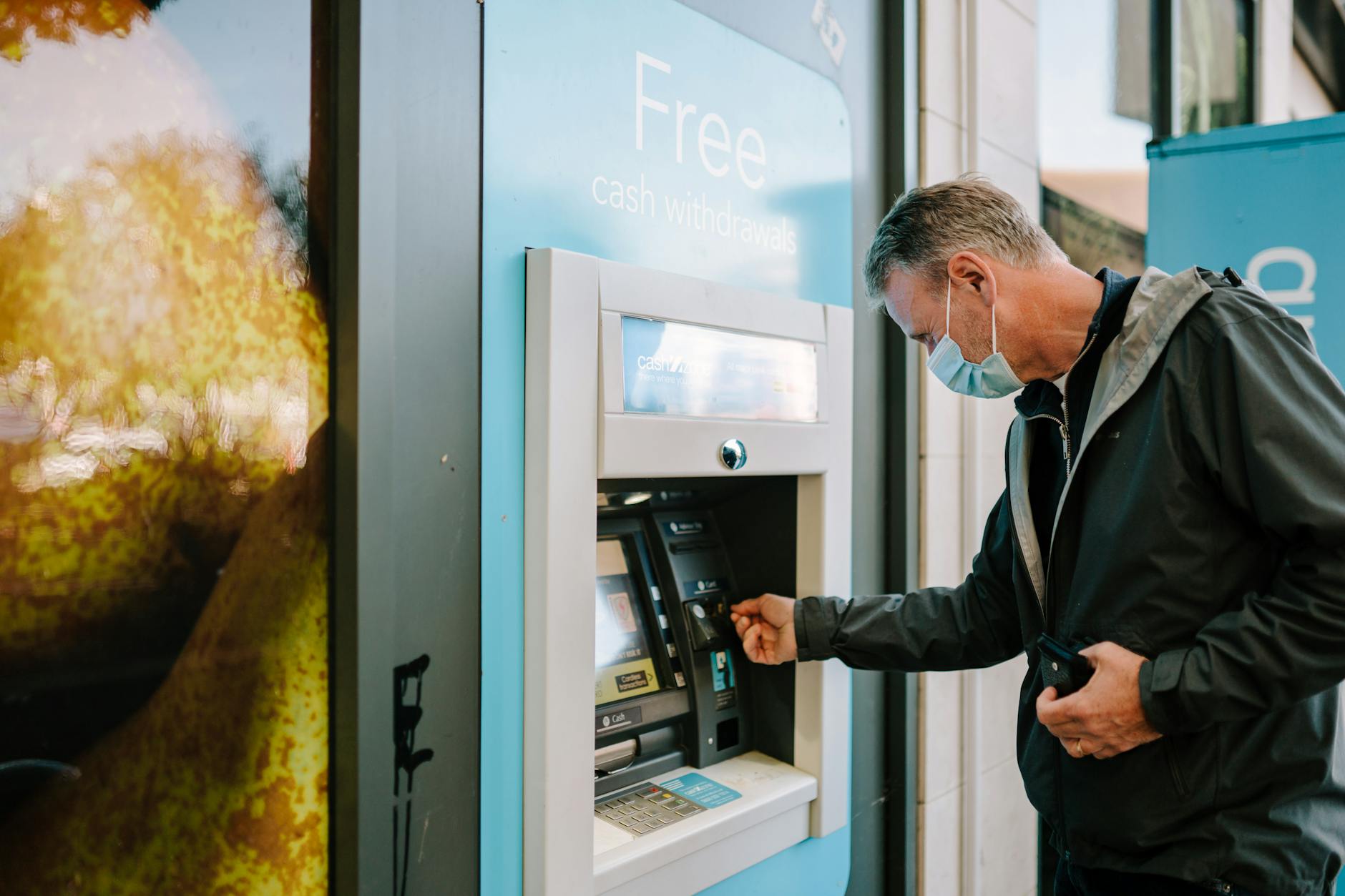
Three of the four largest UK high-street banks reduced their default daily cash withdrawal limits in the third week of May 2026 — Barclays from £300 to £250, NatWest from £300 to £250, and Lloyds from £500 to £300 on standard current accounts. HSBC retained its £300 cap. None of the four issued a press release; the change was announced through a banking-app notification two days before it took effect, and confirmed only in fine-print updates to the personal-banking terms and conditions. The trigger was an APP fraud and cash-mule typology paper from the National Crime Agency that has been circulating among the major bank fraud teams since February.
For most current-account holders the new limit is invisible — the median UK cash withdrawal at an ATM is £40, and the average across the network is £58. For people who actually use cash at the upper end of normal usage — small-business owners taking float at the start of the week, savers withdrawing for property deposits or private sales, anyone funding a holiday in cash — the change is material, and the workarounds the banks are quietly steering customers toward involve either branch counter visits (which are vanishing) or pre-notified larger transactions (which create their own friction).
The specific limits, account by account
The headline cuts apply to the standard current-account products. Premium and packaged products were largely spared:
- Barclays Premier: still £750 a day from ATMs, £2,000 from a branch counter with debit-card verification.
- NatWest Premier Reward Black: £750 a day from ATMs.
- Lloyds Club / Platinum: £500 from ATMs, £2,000 from a branch.
- HSBC Premier: £1,000 from ATMs.
- Nationwide FlexAccount: kept its £500 daily ATM limit unchanged across all products.
- Santander Edge / Edge Up: £300, unchanged.
Among the neobanks, Starling held at £300, Monzo at £400 (£250 outside the EEA), Chase UK at £500. Revolut's standard plan is £200; Premium is £400; Metal is £600.
Why the high street cut, and the neobanks did not
The NCA paper that drove the change focused on a fraud pattern in which scam victims withdraw progressively larger cash amounts across consecutive days under social-engineering pressure — the so-called "layered withdrawal" pattern. The banks that cut their limits did so because their fraud-loss modelling showed that even small reductions in the daily cap (from £300 to £250, for instance) materially compressed the time available for a victim to be talked into a high-value mule transaction.
The neobanks did not cut because their real-time transaction monitoring already flagged the typology at lower thresholds. Starling's fraud team confirmed in a community forum thread in mid-May that a £300 cap was not the bottleneck in their detection — the velocity check on the third consecutive ATM visit in 24 hours was. That difference in technical maturity is the actual story behind the limit divergence, not the policy decision itself.
How to lift the limit when you genuinely need to
All four big banks retain a temporary limit-increase mechanism that most customers have never used. The process is broadly the same across providers: open the banking app, navigate to card or security settings, select "increase daily limit", confirm via biometric or two-factor, and the new limit applies for either 24 or 72 hours, depending on bank. The increased ceiling sits between £750 and £2,000, again depending on bank.
The catch is that the temporary increase often does not work at certain ATM operators (notably LINK-only machines outside branches and the cash-back system at supermarket tills), only at the parent bank's own ATM network. That is rarely communicated up-front; it is in the small print of the temporary-increase confirmation screen.
For genuinely larger cash needs — buying a second-hand car for cash, paying a private-seller deposit, large family events — the cleaner route is a branch counter withdrawal. The cap there is typically £2,000 to £5,000 with debit-card verification, £10,000 with ID and 24 hours' notice. Branch counter availability has, however, halved since 2022; roughly 1,000 UK bank branches have closed since the start of 2024.
The three accounts where the old limits still apply
For customers whose use case genuinely involves consistent higher-cash usage, three product categories are still operating at or above pre-May limits in 2026:
Nationwide FlexAccount
Building society membership rather than bank shareholding has kept Nationwide's product strategy closer to retail-customer preferences. The £500 daily ATM cap was reviewed in April and explicitly retained. Worth opening as a secondary current account if cash usage is regular.
Chase UK current account
The JP Morgan-owned UK retail bank kept its £500 daily ATM limit through the May review. Cashback of 1% on debit-card spending in the first year sweetens the proposition; the account costs nothing to hold.
Premier banking tiers across the high street
Available to customers earning above £75,000 or holding £100,000 of investable assets with the bank. The £750-£1,000 ATM caps held across all four big-bank Premier products through the May review. Worth a conversation with relationship banking if you are already close to the threshold.
What this means for day-to-day banking
For most current-account holders the change is irrelevant — under £100 weekly cash usage continues unaffected. For the genuinely cash-active 7%-9% of adult UK customers (small business, certain trades, hobbyists in cash-heavy activities like collecting and antiques), the workaround is now a two-account strategy: a high-street current account for everyday banking, and a Nationwide, Chase or neobank secondary account for cash needs. Setting up the second account takes about fifteen minutes online and ten days for the debit card to arrive.
The deeper story underneath the May cuts is that UK banking has now bifurcated between the high-street institutions optimising for fraud loss reduction and the newer products optimising for customer flexibility. The customer who notices the difference is the one who occasionally needs cash above the new limits — and the customer who fixes the problem is the one who reads the small print of their banking app at the moment the change lands, not three months later at an ATM that refuses the withdrawal.